
In a constant stride for change and innovation, the movement for regeneration is often a tension between the perception that sustainable solutions are superficial and the accusation that formulas of the past are harmful. Polarising stands reduce common grounds for discussion which resolve in more polarisation, less understanding, more anger, less tolerance. In that transition towards constant change, we can step back, zoom out and reflect in lessons from history, that which popular movements create from the ground up.
Revisiting feminist history, iconic figures such as Simone de Beauvoir do not stand without controversy. But their contribution is still important if we can see our shared history as a continuum of constant progression without a final answer but an ongoing conversation.
Away from individual figures, looking at movements such as the ‘pañuelo blanco’ in Argentina, where ‘madres y abuelas’ (mothers and grandmothers), used the white triangular scarves on their head to represent their kinship to those who were taken over the period of the dictatorship that rules the country from 1976 to 1983. The green ‘pañuelo’ is now collectively worn in the fight for abortion rights while the purple ‘pañuelo’ dresses feminist masses marching together.
The symbolism of the ‘pañuelo blanco’ in Argentina is materialised heritage that keeps a movement alive and illustrates Laundauer’s exploration of social movements through revolutions, ‘the survival of the ancestors in new forms and shapes’ (Landauer, 2010, 102). Each pañuelo represents new layers of meaning, of cumulative understandings of structural patriarchy. Similar to that chant “we are the daughters of the witches you didn’t burn” or the modern use of the colour purple brought by the Suffragettes, the “madres” are a precedent and iconic reference of current movements.
The symbolism of the ‘pañuelo blanco’ in Argentina is materialised heritage that keeps a movement alive and illustrates Laundauer’s exploration of social movements through revolutions, ‘the survival of the ancestors in new forms and shapes’ (Landauer, 2010, 102). Each pañuelo represents new layers of meaning, of cumulative understandings of structural patriarchy. Similar to that chant “we are the daughters of the witches you didn’t burn” or the modern use of the colour purple brought by the Suffragettes, the “madres” are a precedent and iconic reference of current movements.
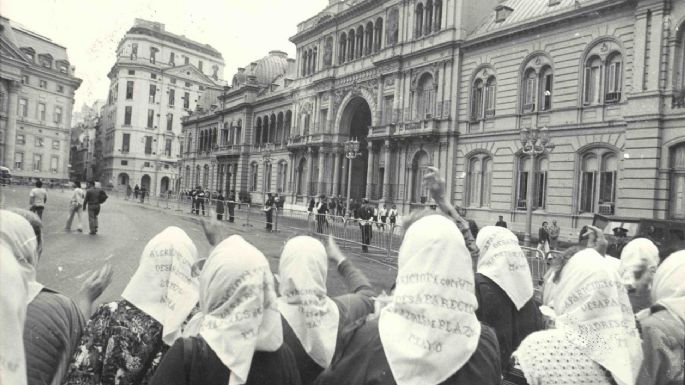
Chants, symbols, songs are visual, audible or performative forms of reference but they stand for all the other subtle ways in which those revolutions brought changes that are palpable when we reflect about stories of the past that now seem like dystopian fiction. The fights that precede us matter in our present because we are shaped by history, the lives of many whom we never met. However, while we cherish historic icons, I fear that we might fail to integrate multiple generations in the same time period in the conversation for a better world.
This entry will reflect on the popularised meme ‘ok boomer’ and its encapsulation of a synchronous and repetitive confrontation of disdain and defensiveness between generations. An expression born on the internet in 2019, arrived as an inside joke between generational peers used to disregard and poke fun of the stereotyped attitudes of the baby boomer generation representing the old ways incapable of adjusting to the modern world. It was an ironic response of a young person being lectured by someone born between the 40s and 60s in a rather paternalistic manner that disregarded the concerns we raised about the world and the ideas we brought.
‘Ok boomer’ is a contemporary reaction to something as old as Socrates’ infamous dislike for young ways of doing and their disrespect for elders. The rejection towards what is supposedly deactualised or what has shorter experience is a timeless strife. Revising history we are reminded that we have not invented feminism, dissent, vindication or protests. But we can reflect with more depth, accuracy and sensitivity on topics such as intersectionality, sustainability, regeneration or cyclical economy.
Landauer’s account of revolution encompasses an inherent desire to idealise a better version of ourselves and the world we inhabit together. Each revolution is but an attempt to recognise problems, prescribe solutions and test them, often picking up historical lessons from a further away past which allow us to break from the constraints of the status quo or our most immediate present. Both the “pañuelo blanco” and “ok, boomer” are symbols of such cycle of social processes, an ongoing transgenerational conversation. The former illustrates inherited problems, it is a reference of resistance, an awareness that connects us to history. The latter, encapsulates the cyclical break from the previous generation and defensiveness to change.
An intergenerational conversation generates a debate to understand which direction the world is heading and how we can contribute with our experience in the action of the young. We are but generations inheriting the fights, conversations, protests of others in the past. It is through history that we learn about previous mistakes, watched in the perspective of living in the future, nurtured by the experience of the seniors and inspired by the new visions and flammable idealism of the young.
Before prejudice, stereotypes and dogma, we could advocate for open-mindedness and reflection about what’s happened or is happening. Changing opinions is not a sign of weakness or immaturity but a healthy way to accept mistakes and find new paths
—
Laundauer, Gustav. “Through Separation to Community” in Revolution and Other Writings: A Political Reader, translated by Gabriel Kuhn. Oakland, California: PM Press. 2010, 94-109.


Leave a Reply