Artificial Intelligence will take over the way we do…everything in ways we cannot yet completely predict.Technology is gradually taking over the work that human minds and bodies used to do. The problem is that this replacement is not necessarily translating in time liberated for workers, rather it has brought more wealth for some and more precariousness for the majority. Poverty is expensive, social workers, benefits, special programs, rehabilitation centres and mental health institutions for problems derived from poverty, the public resources spent on controlling, medicating, supporting and punishing homelessness or living in the margins of the norm… that all costs money.
When Covid happened, inequality grew, however, those at the top realised that this wasn’t a situation of saving themselves, there was no saving themselves without saving the rest. If vaccines had been subject to the free market instead of being given by governments, how many vaccines would a rich economic group had to purchase to save themselves? Who would look after their children? Collect the bins? Who would clean their home or drive them to work? What about the families of all of those employees? Over the first lockdown, what cushioned the hit was furlough and what resolved the situation were the vaccines. In other words, what saved us was the organisations of states, it was social welfare.
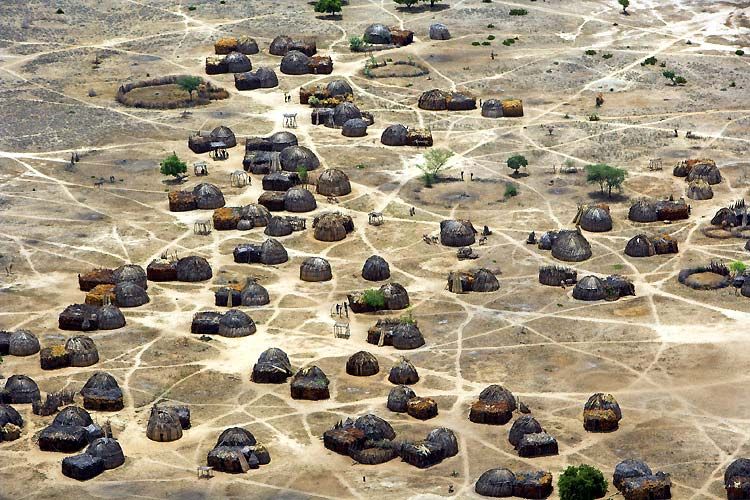
Thus, if AI does indeed liberate time, neoliberalism will catch up with that freed time to create new experiences to purchase or commercialise human interactions, reinforcing detachment from meaning and social inequalities and between nations.While wealthy countries will benefit from AI, impoverished nations will still have the same struggles: undrivable roads will continue to isolate communities, those communities will still have to be self reliant sourcing food and materials to build shelter, access water, medication, schools, medical attention, teaching staff… We cannot let our drive to consume new experiences do what tourism has done to city centres in European cities, we cannot speculate with their land for the dream of building the fancy eco hotel we can’t afford to build in the west, we cannot contribute to a model of tourism that isolates the host community with its struggles but also with the richness of their unique cultural character.


Ultimately, we cannot let inequality between nations grow simply because we one’s choices will not change the problems of the wider society. Neoliberalism feeds off what the masses want to consume. It is not so reckless to state that in some countries we might have more sovereignty as consumers than we have democratically. Choosing to actively seek sources to educate ourselves about the country we are going to visit and how the activities we are planning for our trip affects it will eventually impact how some businesses choose to operate. If there is a market for people choosing sustainability over quantity, there will be businesses to cover that need.
WHAT’S YOUR FAVOURITE COLOUR?
If poverty in our own nations is becoming increasingly dependent and exponentially more expensive for the states to manage, we cannot let this happen at a wider scale making developing nations more dependent and growingly more precarious. Poverty is suffering, shared suffering leads to unrest which always develops in conflict whether that is manifested in crime, war or street demonstrations. We must invest in our global harmony and to do so, we need to include all sides of it. This does not necessarily mean avoiding resort tourism and their replication of the commodities and improved life-style which tourists have at home. Resort tourism can also contribute to bringing entrepreneurship and expertise in places where those skills are not there, larger hotels bring more stable jobs, potentially training and can organise trips that can help reactivate local crafts that would otherwise be lost. Regenerative tourism is about thinking of the interconnection of the whole ecosystem. Thus not only planning and giving local people a voice is essential, a tourism development plan that looks beyond the tourism activity and rather fits within the national development plan. Furthermore it is also worth considering, for governments of the tourists’ home countries to take a more active interest in the wellbeing of many of the poorest countries in the world.
Tourism is not and should not only be about the visitor but rather about the cultural and natural heritage and the social and economic infrastructure of the place. Tourism has to benefit first and foremost the people that were there when you arrived and will continue to be there when you leave.Tourism can be a shortcut to wealth but if the industry is set up solely oriented to grow, as business ventures of wealthy nations investing on foreign and cheaper land and labour, and we lose sight of how that impacts the wider community in the short and long term, we are threatening to create some irreversible damage. We must take this opportunity to not just look at those at the top and how we live (or not) at the bottom of a system of oppression and consumerism but also acknowledge the wider whole.We must begin to think of the interconnection of every side. We are part of a system designed to collapse and saturate where each of us play multiple roles.
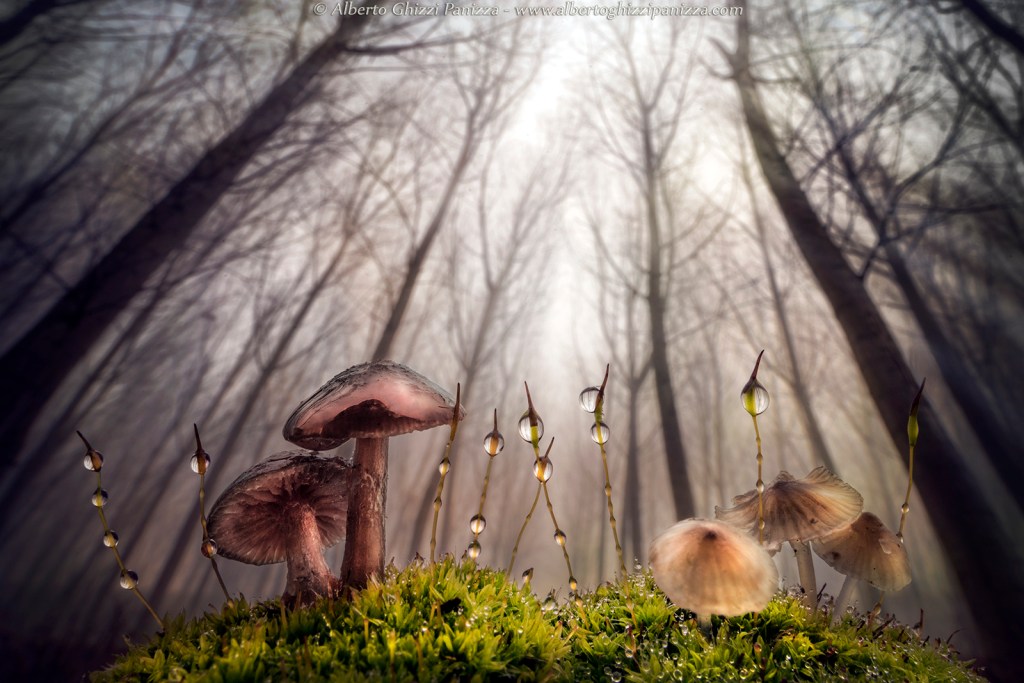
Let’s think of a forest, a unique system, interconnected, dynamic. A vessel of life where its mutually dependent parts work together with a superior goal repeating a set of patterns. Bees pollinate, ants with their spongious channels aerate the soil; flowers ensure the reproduction and survival of the plants, when a tree is ill, mushrooms through mycelium connect the tree to the rest to send water and nutrients even if it is from a different species. Nature has its rules for regeneration or restoration that allow it to learn, regenerate, evolve ensuring the sustainability of the whole ecosystem in a relationship of mutual benefit. An intelligent system and completely efficient, there is no waste in harmony.
Over centuries we have seen the universe like a place, a machine made of separate parts, separate nations, divided people, alien problems far away.The loss of biodiversity, environmental catastrophes, poverty, hunger, wars, the water crisis, social instability, all of those are systematic problems. None of them can be understood in isolation because they are all interconnected and they are interdependent. Thus when one of them worsened, the rest also become immediately affected, amplifying or much more dangerous diversifying its effects.
Regenerative design goes one step further than sustainability. It’s a term designed to define processes that regenerate and restore damaged ecosystems or as a principle of design. The purpose of regeneration is no other than the purpose of life itself. Creating the adequate conditions so all forms of life can flourish and prosper. Regenerative design takes inspiration from how living systems function to learn from them and imitate them finding solutions in problems we find as humans that nature has already resolved previously. The human body is a living system but so is a neighbourhood, a city, an organisation, a building, a destination.
Principles of a regenerative model are used in architecture, urban planning, leadership, economy, fashion and naturally tourism. Plastics made of algae, shoe soles made of sugar cane, leather made of mushrooms…biodegradable, they decompose and enter again in the cycle of the earth without polluting.
Tourism is a great source of wealth, not only at an economic level but also at a social and cultural level. We learn when we travel, it opens our minds. The issue comes when that element has been separated from the destination, the hosts and we have instead focussed on growth, the excessive economic growth that has led to abusive behaviour, abusive constructions, a degradation of the historic and cultural heritage, inflation, gentrification, speculation. All of it with the result of neighbours’ dissatisfaction, a boom in tourism if paired with a rapid increase in construction will inevitably lead to inflation and then to unemployment.
We all like to travel maybe once a year, research what to visit, what we should see, eat, do, learn a bit about the culture and traditions… But massification has forced us spooner to reach a point where this does not satisfy the original goals it used to respond to. The pursuit of knowing another culture, integrating yourself in it, different ways of doing, other customs. To learn and maybe know oneself better. Especially because what we experience now when we travel is massified places, long queues to visit monuments, food for tourists exorbitantly expensive and city centres that have lost its identity, the same shops, the same cafes, the same souvenirs. Not only are we travelling to visit places already discovered where we know exactly what we’ll see but also the meaning and value of it has been removed from the ecosystem it belongs to.
It is ultimately in the interest of the traveller as much as the host whether or not involved in the tourist activity directly or passively. Everything is connected. Tourists’ expectations about their destinations are generated or reinforced by the false images disseminated by tour operators, travel agents, the media, and even official tourism organisations marketise a product that has to do more with tourists fantasies than with the culture of the host country. But the greatest opportunities of regeneration don’t lie on the international interdependence but the local. To design for resilience we must concentrate on giving value to the locals connected with its territory and its people. And for the governments of the tourist home countries to advocate to strengthen local authorities.
 Purposeful Disorientation